
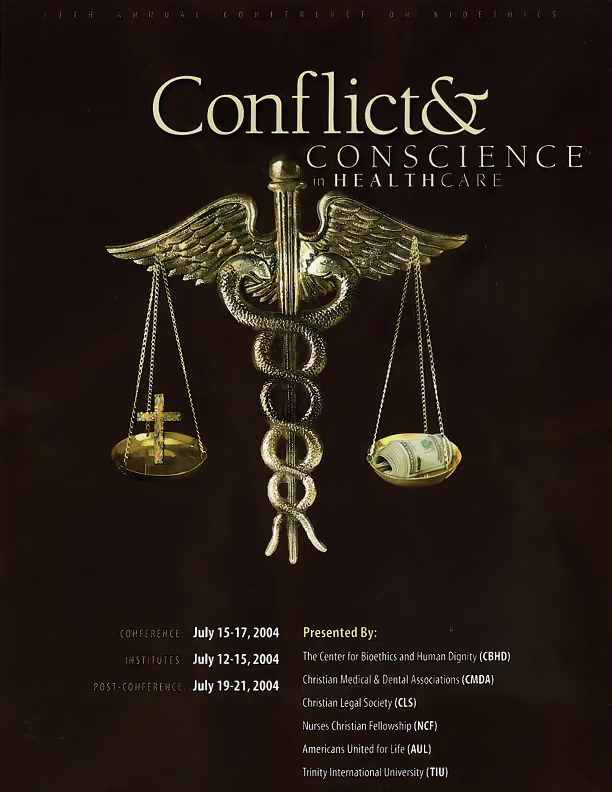
How to Boil a Frog: Place a frog in a least one gallon of pond water, preferably at room temperature or slightly below. Turn the heat on gently, with the goal of increasing the temperature of the water no more than one degree every minute. A no time during the process should you directly disturb the frog or try to stir the water. If you follow these directions carefully, within less than two hours you should have successfully boiled the frog, without the frog jumping out of the water at any time. Remove and discard the frog. It is the frog’s water you want anyhow.This set of cooking instructions summarizes well the influence the legal system has had on the practice of medicine in the United States over the last 30 years. We have evolved from a profession dedicated to patient welfare and clinical science to a conglomerate of health care providers, clients, best practice guidelines, and managed benefits. We talk less of quality of care and more of standards of care. We have substituted entitlement financing of care for individual accountability, and thus have equated third party payment with access to health care. We have reduced a sacred trust to a measurable commodity. Ironically, the dedication of the medical profession to equity and justice has allowed, and arguably encouraged, each of these changes, which now threaten the integrity of medical practice. The three major areas of law that have changed individual medical practices into big business are (1) Federal and State legislation that specifically regulates medicine; (2) evolving principles of legal liability for medical negligence; and (3) the application of business law, especially the Sherman Antitrust Act, to medical practice. Each of these areas of law will be examined briefly, especially in the light of how these legal principles are rapidly changing Hippocratic and Biblical values.The history of medical practice in the United States is replete with examples of the best and worst of human behavior, usually a mirror of larger social trends. As such, medicine remains a sensitive barometer of the moral character of our nation. The central question to be answered in the next decade will be: “Who will control the practice of medicine, and to what end?” Far too often, physicians have been willingly involved the abuses of the culture that surrounds them, rationalizing terrible behavior by short steps, ignoring what they see as inevitable. We are close to serious problems today. Will we remember the moral balance in Christ’s command to “Render unto Caesar what is Caesar’s, but unto God what is God’s?” Will we be able to distinguish between the two? Can the frog still jump out of the pot?