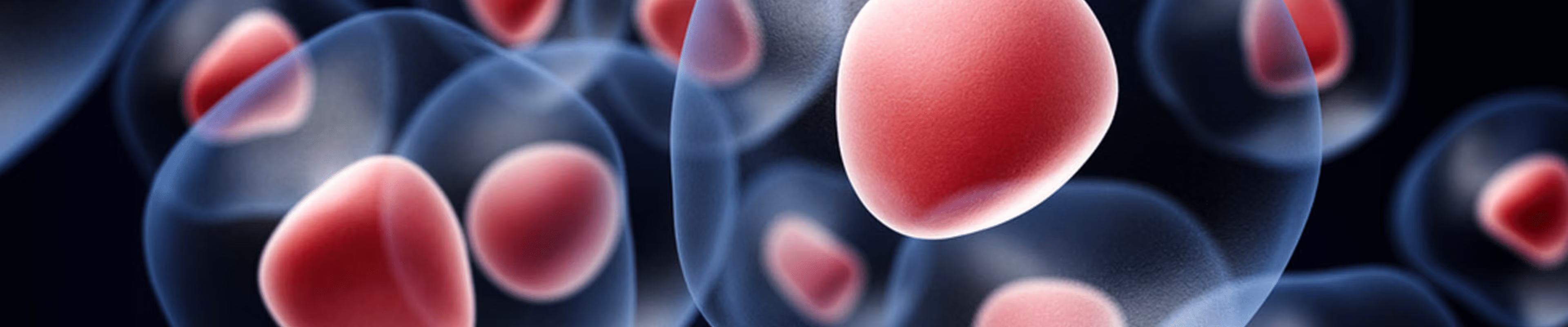
Stem cell research has been touted as a highly promising avenue for the treatment of disease and injury. Embryonic stem cells (ESC) have the ability to differentiate into the more than 200 different cell types in the human body. While these controversial cells have been promoted as more promising for the treatment of disease, this research involves the destruction of embryos, and thus makes it unethical from CBHD's perspective. Furthermore, despite all of the early claims of potential ESC research has faced significant technical hurdles. Adult stem cells are found in several human tissues (e.g., bone marrow and umbilical cord blood), and in contrast to embryonic stem cells do not raise the same kind of moral concerns and have provided a number of successful treatments and therapies. Recent advances in this field also include the discovery and development of induced pluripotent stem cells (iPS or iPSCs) and direct cell reprogramming, both of which hold significant promise for the understanding and treatment of disease and avoid the ethical concerns of embryonic stem cell research raised by the destruction of human embryos. Other ethical considerations regarding stem cell research include the potential use of human pluripotent stem cells in animals as well as the potential creation of human gametes or embryos from stem cells. Stem cell research falls under the broader category of biotechnology.
Recent scientific advances in human stem cell research have brought into fresh focus the dignity and status of the human embryo. These developments require that the legal, ethical, and scientific issues associated with this research be critically addressed and articulated. Our careful consideration of these issues leads to the conclusion that human stem cell research requiring the destruction of human embryos is objectionable on legal, ethical, and scientific grounds. Moreover, destruction of human embryonic life is unnecessary for medical progress, as alternative methods of obtaining human stem cells and of repairing and regenerating human tissue exist and continue to be developed.1
In November 1998, two independent teams of U.S. scientists reported that they had succeeded in isolating and culturing stem cells obtained from human embryos and fetuses.2 Stem cells are the cells from which all 210 different kinds of tissue in the human body originate.3 Because many diseases result from the death or dysfunction of a single cell type, scientists believe that the introduction of healthy cells of this type into a patient may restore lost or compromised function. Now that human embryonic stem cells can be isolated and multiplied in the laboratory, some scientists believe that treatments for a variety of diseases-such as diabetes, heart disease, Alzheimer's, and Parkinson's-may be within reach.4 While we in no way dispute the fact that the ability to treat or heal suffering persons is a great good, we also recognize that not all methods of achieving a desired good are morally or legally justifiable. If this were not so, the medically accepted and legally required practices of informed consent and of seeking to do no harm to the patient could be ignored whenever some "greater good" seems achievable.5
One of the great hallmarks of American law has been its solicitous protection of the lives of individuals, especially the vulnerable.6 Our nation's traditional protection of human life and human rights derives from an affirmation of the essential dignity of every human being.7 Our nation's traditional protection of human life and human rights derives from an affirmation of the essential dignity of every human being. Likewise, the international structure of human rights law-one of the great achievements of the modern world-is founded on the conviction that when the dignity of one human being is assaulted, all of us are threatened. The duty to protect human life is specifically reflected in the homicide laws of all 50 states.8 Furthermore, federal law and the laws of many states specifically protect vulnerable human embryos from harmful experimentation.9 Yet in recently publicized experiments, stem cells have been harvested from human embryos in ways which destroy the embryos.10
Despite an existing congressional ban on federally-funded human embryo research,11 the Department of Health and Human Services (HHS) determined on January 15, 1999 that the government may fund human embryonic stem cell research.12 The stated rationales behind this decision are that stem cells are not embryos (which itself may be a debatable point) and that research using cells obtained by destroying human embryos can be divorced from the destruction itself.13 However, even the former National Bioethics Advisory Commission (NBAC) denied this latter claim, as is evident by the following statement in its May 6, 1999 Draft Report on Stem Cell Research:
Whereas researchers using fetal tissue are not responsible for the death of the fetus, researchers using stem cells derived from embryos will typically be implicated in the destruction of the embryo. This is true whether or not researchers participate in the derivation of embryonic stem cells. As long as embryos are destroyed as part of the research enterprise, researchers using embryonic stem cells (and those who fund them) will be complicit in the death of embryos.14
If the flawed rationales of HHS are accepted, federally-funded researchers may soon be able to experiment on stem cells obtained by destroying embryonic human beings, so long as the act of destruction does not itself receive federal funds.15 However, the very language of the existing ban prohibits the use of federal funds to support "research in which a human embryo or embryos are destroyed, discarded, or knowingly subjected to risk of injury or death . . . ."16 Obviously, Congress' intent here was not merely to prohibit the use of federal funds for embryo destruction, but to prohibit the use of such funds for research dependent in any way upon such destruction. Therefore, the opinion that human embryonic stem cell research may receive federal funding appears to violates both the language of and intention behind the existing law.17
It is important to recognize also that research involving human embryos outside the womb-such as embryos produced in the laboratory by in vitro fertilization (IVF) or cloning-has never received federal funding. Initially, this was because a federal regulation of 1975 prevented government funding of IVF experiments unless such experiments were deemed acceptable by an Ethics Advisory Board.18 Following the failure of the first advisory board to reach a consensus on the matter,19 no administration chose to appoint a new board. After this regulation was rescinded by Congress in 1993,20 the Human Embryo Research Panel recommended to the National Institutes of Health (NIH) that certain kinds of harmful nontherapeutic experiments using human embryos receive federal funding.21 However, these recommendations were rejected in part by former President Clinton22 and then rejected in their entirety by Congress.23
Further, it is instructive to note that the existing law which permits researchers to use fetal tissue obtained from elective abortions requires that the abortions are performed for reasons which are entirely unrelated to the research objectives.24 This law thus prohibits promoting the destruction of human life in the name of medical progress, yet medical progress is precisely the motivation and justification offered for the destruction of human life that occurs when stem cells are obtained from human embryos.25
Current law against funding research in which human embryos are harmed and destroyed reflects well-established national and international legal and ethical norms against the misuse of any human being for research purposes. Since 1975, those norms have been applied to unborn children at every stage of development in the womb, and since 1995 they have been applied to the human embryo outside the womb as well.26 The existing law on human embryonic research is a reflection of universally accepted principles governing experiments on human subjects-principles reflected in the Nuremberg Code, the World Medical Association's Declaration of Helsinki, the United Nations Declaration of Human Rights, and many other statements. Accordingly, members of the human species who cannot give informed consent for research should not be the subjects of an experiment unless they personally may benefit from it or the experiment carries no significant risk of harming them. Only by upholding such research principles do we prevent treating people as things-as mere means to obtaining knowledge or benefits for others.
It may strike some as surprising that legal protection of embryonic human beings can co-exist with the U.S. Supreme Court's 1973 legalization of abortion.27 However, the Supreme Court has never prevented the government from protecting prenatal life outside the abortion context,28 and public sentiment also seems even more opposed to government funding of embryo experimentation than to the funding of abortion.29 The laws of a number of states-including Louisiana, Maine, Massachusetts, Michigan, Minnesota, Pennsylvania, Rhode Island, and Utah-specifically protect embryonic human beings outside the womb. Most of these provisions prohibit experiments on embryos outside the womb.30 We believe that the above legally acknowledged protections against assaults on human dignity must be extended to all human beings-irrespective of gender, race, religion, health, disability, or age. Consequently, the human embryo must not be subject to willful destruction even if the stated motivation is to help others. Therefore, on existing legal grounds alone, research using stem cells derived from the destruction of early human embryos is proscribed.
The decision to federally fund research involving the destruction of human embryos would be profoundly disturbing even if this research could result in great scientific and medical gain. The prospect of government-sponsored experiments to manipulate and destroy human embryos should make us all lie awake at night. That some individuals would be destroyed in the name of medical science constitutes a threat to us all. Recent statements claiming that human embryonic stem cell research is too promising to be slowed or prohibited underscore the sort of utopianism and hubris that could blind us to the truth of what we are doing and the harm we could cause to ourselves and others. Human embryos are not mere biological tissues or clusters of cells; they are the tiniest of human beings.31 Thus, we have a moral responsibility not to deliberately harm them.
An international scientific consensus now recognizes that human embryos are biologically human beings beginning at fertilization, and acknowledges the physical continuity of human growth and development from the one-cell stage forward.32 In the 1970s and 1980s, some frog and mouse embryologists referred to the human embryo in its first week or two of development as a "pre-embryo," claiming that it deserved less respect than embryos in later stages of development.33 However, some embryology textbooks now openly refer to the term "pre-embryo" as a scientifically invalid and "inaccurate" term which has been "discarded" and others which once used the term have quietly dropped it from new editions.34 Both the Human Embryo Research Panel35and the former National Bioethics Advisory Commission36 also rejected the term, describing the human embryo from its earliest stages as a living organism and a "developing form of human life."37 The claim that an early human embryo becomes a human being only after 14 days or implantation in the womb is therefore a scientific myth. Finally, the historic and well-respected 1995 Ramsey Colloquium statement on embryo research acknowledges that:
The [embryo] is human; it will not articulate itself into some other kind of animal. Any being that is human is a human being. If it is objected that, at five days or fifteen days, the embryo does not look like a human being, it must be pointed out that this is precisely what a human being looks like--and what each of us looked like--at five or fifteen days of development.38
Therefore, the term "pre-embryo," and all that it implies, is scientifically invalid.
The last century and a half has been marred by numerous atrocities against vulnerable human beings in the name of progress and medical benefit. In the 19th century, vulnerable human beings were bought and sold in the town square as slaves and bred as though they were animals.39 In this century, the vulnerable were executed mercilessly and subjected to demeaning experimentation at Dachau and Auschwitz.40 At mid-century, the vulnerable were subjects of our own government's radiation experiments without their knowledge or consent.41 Likewise, vulnerable African-Americans in Tuskegee, Alabama were victimized as subjects of a government-sponsored research project to study the effects of syphilis.42 Currently, we are witness to the gross abuse of mental patients used as subjects in purely experimental research.43 These experiments were and are driven by a crass utilitarian ethos which results in the creation of a "sub-class" of human beings, allowing the rights of the few to be sacrificed for the sake of potential benefit to the many. These unspeakably cruel and inherently wrong acts against human beings have resulted in the enactment of laws and policies which require the protection of human rights and liberties, including the right to be protected from the tyranny of the quest for scientific progress. The painful lessons of the past should have taught us that human beings must not be conscripted for research without their permission-no matter what the alleged justification-especially when that research means the forfeiture of their health or lives. Even if an individual's death is believed to be otherwise imminent, we still do not have a license to engage in lethal experimentation-just as we may not experiment on death row prisoners or harvest their organs without their consent.
We are aware that a number of Nobel scientists endorse human embryonic stem cell research on the basis that it may offer a great good to those who are suffering.44 While we acknowledge that the desire to heal people is certainly a laudable goal and understand that many have invested their lives in realizing this goal, we also recognize that we are simply not free to pursue good ends via unethical means. Of all human beings, embryos are the most defenseless against abuse. A policy promoting the use and destruction of human embryos would repeat the failures of the past. The intentional destruction of some human beings for the alleged good of other human beings is wrong. Therefore, on ethical grounds alone, research using stem cells obtained by destroying human embryos is ethically proscribed.
Integral to the decision to use federal funds for research on human embryonic stem cells is the distinction between stem cells and embryos. HHS has stated that federal funds may be used to support human embryonic stem cell research because stem cells are not embryos. A statement issued by the Office of the General Counsel of HHS regarding this decision asserts that "The statutory prohibition on the use of [government] funds...for human embryo research would not apply to research utilizing human pluripotent stem cells because such cells are not a human embryo within the statutory definition. [Moreover, because] pluripotent stem cells do not have the capacity to develop into a human being, [they] cannot be considered human embryos consistent with the commonly accepted or scientific understanding of that term."45
It is important to note that the materials used in an experiment, as well as the methods of experimentation, are considered to be part of scientific research. When a scientific study is published, the first part of the article details the methods and materials used to conduct the research. Ethical and scientific evaluation of an experiment takes into account both the methods and materials used in the research process. Therefore, the source of stem cells obtained for research is both a scientifically and ethically relevant consideration.
Research on human embryonic stem cells is objectionable due to the fact that such research necessitates the prior destruction of human embryos;46 however, the HHS's claim that stem cells are not, and cannot develop into, embryos may itself be subject to dispute. Some evidence suggests that stem cells cultured in the laboratory may have a tendency to recongregate and form an aggregate of cells capable of beginning to develop as an embryo. In 1993, Canadian scientists reported that they successfully produced a live-born mouse from a cluster of mouse stem cells. While it is true that these stem cells had to be wrapped in placenta-like cells in order to implant in a female mouse, it seems that at least some doubt has been cast on the claim that a cluster of stem cells is not embryonic in nature.47 If embryonic stem cells do indeed possess the ability to form or develop as a human embryo (without any process of activation which affects the transformation of the cell into a human embryo), research on such stem cells could itself involve the creation and/or destruction of human life and would thereby certainly fall under the existing ban on federally-funded embryo research. It would be irresponsible for the HHS to conduct and condone human embryonic stem cell research without first discerning the status of these cells. Their use in any research in which they could be converted into human embryos should likewise be banned.
While proponents of human embryonic stem cell research lobby aggressively for government funding of research requiring the destruction of human embryos, alternative methods for repairing and regenerating human tissue render such an approach unnecessary for medical progress.
For instance, a promising source of more mature stem cells for the treatment of disease is hematopoietic (blood cell-producing) stem cells from bone marrow or even from the placenta or umbilical cord blood in live births. These cells are already widely used in cancer treatment and in research on treating leukemia and other diseases.48 Recent experiments have indicated that their versatility is even greater than once thought. For example, given the right environment, bone marrow cells can be used to regenerate muscle tissue, opening up a whole new avenue of potential therapies for muscular dystrophies.49 In April 1999, new advances were announced in isolating mesenchymal cells from bone marrow and directing them to form fat, cartilage, and bone tissue.50 Experts in stem cell research believe that these cells may allow for tissue replacement in patients suffering from cancer, osteoporosis, dental disease, or injury.51
An enormously promising new source of more mature stem cells is fetal bone marrow, a source which is many times more effective than adult bone marrow and umbilical cord blood.52It appears that fetal bone marrow cells do not provoke immune reactions to the same degree as adult or even newborn infant cells. This is true whether the unborn child is the donor or the recipient-that is, fetal cells can be used to treat adults, or adult bone marrow cells can be used to treat a child in the womb without the usual risk of harmful immune reactions.53 Such cells would not need to be derived from fetuses who were intentionally aborted, but could instead be obtained from spontaneously aborted fetuses or stillborn infants.54
In 1999, unprecedented advances were also made in isolating and culturing neural stem cells from living human nerve tissue and even from adult cadavers. Such advances render it quite possible that treatment of neural diseases such as Parkinson's and Alzheimer's, as well as spinal cord injuries, will not depend upon destructive embryo research.55
Earlier claims that embryonic stem cells are uniquely capable of "self-renewal" and indefinite growth can also now be seen as premature. For example, scientists have isolated an enzyme, telomerase, which may allow human tissues to grow almost indefinitely. Although this enzyme has been linked to the development of cancer, researchers have been able to use it in a controlled way to "immortalize" useful tissue without producing cancerous growths or other harmful side effects. Thus, cultures of non-embryonic stem cells may be induced to grow and develop almost indefinitely for clinical use.56
One of the most exciting new advances in stem cell research is the January 1999 announcement that Canadian and Italian researchers succeeded in producing new blood cells from neural stem cells taken from an adult mouse.57 Until recently, it was believed that adult stem cells were capable of producing only a particular type of cell: for example, a neural stem cell could develop only into cells belonging to the nervous system. Researchers believed that only embryonic stem cells retained the capacity to form all kinds of tissue in the human body. However, if stem cells taken from adult patients can produce cells and tissues capable of functioning within entirely different systems, new brain tissue needed to treat a patient with Parkinson's disease, for example, might be generated from blood stem cells derived from the patient's bone marrow. Conversely, neural stem cells might be used to produce needed blood and bone marrow. Use of a patient's own stem cells would circumvent one of the major obstacles posed by the use of embryonic stem cells-namely, the danger that tissue taken from another individual would be rejected when transplanted into a patient.58 Thus, in commenting on this finding, the British Medical Journal remarked on January 30, 1999 that the use of embryonic stem cells "may soon be eclipsed by the more readily available and less controversial adult stem cells."59 Given that the function of the adult stem cells was converted without the cells first having to pass through an embryonic stage, the use of such cells would not be subject to the ethical and legal objections raised by the use of human embryonic stem cells.60 The Director of the NIH has pointed out that evidence that adult stem cells can take on different functions has emerged only from studies on mice. However, his own claim that human embryonic stem cell research can produce treatments for diabetes and other diseases is also based solely on experimental success in mice.
One approach to tissue regeneration that does not rely on stem cells at all, but on somatic cell gene therapy, is already in use as an experimental treatment. A gene that controls production of growth factors can be injected directly into a patient's own cells, with the result that new blood vessels will develop. In early trials, this type of therapy saved the legs of patients who would have otherwise undergone amputation.61 It was reported in January 1999 that the technique has generated new blood vessels in the human heart and improved the condition of 19 out of 20 patients with blocked cardiac blood vessels.62 Such growth factors are now being explored as a means for growing new organs and tissues of many kinds.
The above recent advances suggest that it is not even necessary to obtain stem cells by destroying human embryos in order to treat disease. A growing number of researchers believe that adult stem cells may soon be used to develop treatments for afflictions such as cancer, immune disorders, orthopedic injuries, congestive heart failure, and degenerative diseases. Such researchers are working to further research on adult, rather than embryonic, stem cells.63 In light of these promising new scientific advances, we urge Congress to provide federal funding for the development of methods to repair and regenerate human tissue which do not require the destruction of embryonic human life. However, even if such methods do not prove to be as valuable in treating disease as are human embryonic stem cells, use of the latter in the name of medical progress is still neither legally nor ethically justifiable for the reasons stated in this document.
We believe that an examination of the legal, ethical, and scientific issues associated with human embryonic stem cell research leads to the conclusion that the use of federal funds to support any such research that necessitates the destruction of human embryos is, and should remain, prohibited by law. Therefore, we call on Congress to (1) maintain the existing ban against harmful federally-funded human embryo research and make explicit its application to stem cell research requiring the destruction of human embryos and (2) provide federal funding for the development of alternative treatments which do not require the destruction of human embryonic life. If anything is to be gained from the cruel atrocities committed against human beings in the last century and a half, it is the lesson that the utilitarian devaluation of one group of human beings for the alleged benefit of others is a price we simply cannot afford to pay.
For recent information regarding stem cell research visit <www.stemcellresearch.org>.
1 See, for example, Mark Pittenger et al., "Multilineage potential of adult human mesenchymal stem cells," Science 284:143-147, April 2, 1999; Deborah Josefson, "Adult stem cells may be redefinable," British Medical Journal 318:282, January 30, 1999; L. Johannes, "Adult stem cells have advantage battling disease," Wall Street Journal, April 13, 1999, p. B1; P. Rubenstein et al., "Outcomes among 562 recipients of placental-blood transplants from unrelated donors," New England Journal of Medicine 339:1565-1577, November 26, 1998; C.R.R. Bjornson et al., "Turning brain into blood: a hematopoietic fate adopted by adult neural stem cells in vivo," Science 283:534-536, January 22, 1999.
2 Michael Shamblott et al., "Derivation of pluripotent stem cells from cultured human primordial germ cells," PNAS 95:13726-13731, November 1998; James Thomson et al., "Embryonic stem cell lines derived from human blastocysts," Science 282:1145-1147, November 6, 1998.
3Shannon Brownlee, "Heartbeats in a dish: Researchers grow cells that form the basis of human life," U.S. News & World Report, November 6, 1998.
4 "Cell success has huge potential," BBC News: Science/Technology, November 5, 1998.
5 Warren T. Reich (ed.), 5 Encyclopedia of Bioethics, rev. ed., (New York: Macmillan, 1995), 2763; World Medical Association, Declaration of Geneva (1948), reprinted in 5 Encyclopedia of Bioethics (Warren T. Reich, ed., rev. ed., 1995), pp. 2646-2647; World Medical Association, Declaration of Helsinki (rev. ed., 1989), reprinted in 5 Encyclopedia of Bioethics (Warren T. Reich, ed., rev. ed., 1995), p. 2766; United States v. Brandt (The Medical Case), 2 Trials of War Criminals before the Nuremburg Military Tribunals Under Control Council Law No. 10, at 181-82 (1949).
6 Mark David Hall, The Political and Legal Philosophy of James Wilson 1742-1798 (Columbia, MO: Univ. of Missouri Press), 1997.
7 The Declaration of Independence.
8 See generally 40 Am. Jur. 2d Homicide (2nd ed., 1999). See also Clarke D. Forsythe, "Homicide of the Unborn Child: The Born Alive Rule and other Legal Anachronisms," Valporaiso University Law Review 21:563, 1987; Clarke D. Forsythe, "Human Cloning and the Constitution," Valporaiso University Law Review 32:469, 483-513, 1998.
9 See, for example, La. Rev. Stat. Tit. 14 § 87.2; Mass. Gen. Laws ch. 112 § 12J(a); Mich. Comp. Laws § 333.2685; Minn. Stat. §145.422; N.D. Cent. Code §14-02,2-01; Pa. Cons. Stat. Tit. 18 § 3216; R.I. Gen. Laws § 11-54-1(a); Utah Code Ann. § 76-7-310. Massachusetts, Michigan, Minnesota, New Hampshire, North Dakota, and Pennsylvania all have laws which specifically protect vulnerable human embryos from harmful experimentation.
10 James Thomson et al., "Embryonic stem cell lines derived from human blastocysts," Science 282:1145-1147, 1998.
11 Section 511 of the Labor/HHS appropriations bill for Fiscal Year 1999, enacted as part of Public Law 105-277, the Omnibus Consolidated and Emergency Supplemental Appropriations Act for Fiscal Year 1999.
12 Statement of Harold Varmus, M.D., Director of the National Institutes of Health Before the Senate Appropriations Subcommittee on Labor, Health and Human Services, Education and Related Agencies, January 26, 1999.
13 Ibid.
14 National Bioethics Advisory Commission (NBAC) Draft Report; May 6, 1999.
15 Statement of Harold Varmus, M.D., Director of the National Institutes of Health Before the Senate Appropriations Subcommittee on Labor, Health and Human Services, Education and Related Agencies, January 26, 1999; National Bioethics Advisory Commission (NBAC) Draft Report; May 6, 1999.
16 Section 511 of the Labor/HHS appropriations bill for Fiscal Year 1999, enacted as part of Public Law 105-277, the Omnibus Consolidated and Emergency Supplemental Appropriations Act for Fiscal Year 1999.
17 Congressional letter opposing human embryonic stem cell experimentation sent to HHS Secretary Donna Shalala, February 11, 1999.
18 See 45 CFR § 46.201 et seq., based largely on National Commission for the Protection of Human Subjects of Biomedical and Behavioral Research, Research on the Fetus: Report and Recommendations (Washington, D.C.), 1975 (Reprinted at 40 Fed. Reg. 33526 [1975]).
19 HEW Support of Human In Vitro Fertilization and Embryo Transfer: Report of the Ethics Advisory Board, 44 Fed. Reg. 35033-58 (June 18, 1979) at 35055-8.
20 See section 121(c) of the NIH Revitalization Act of 1993, Public Law 103-43, rescinding 45 CFR § 46.204(d).
21 National Institutes of Health, Report of the Human Embryo Research Panel (Bethesda, MD: NIH), 1994.
22 Statement by the President, December 2, 1994 (White House: Office of the Press Secretary).
23 Public Law 104-99, Title I, §128, 110 Stat. 26, 34 (1996).
24 42 USC § 289g-1(b)(2).
25 Statement of Harold Varmus, M.D., Director of the National Institutes of Health Before the Senate Appropriations Subcommittee on Labor, Health and Human Services, Education and Related Agencies, December 2, 1998.
26 National Institutes of Health, Report of the Human Embryo Research Panel (Bethesda, MD: NIH), 1994.
27 Roe et al. v. Wade, District Attorney of Dallas County, 410 U.S. 113, January 22, 1973. Appeal from the United States District Court for the Northern District of Texas, no. 70-18. Argued December 13, 1971-Reargued October 11, 1972-Decided January 22, 1973.
28 Webster v. Reproductive Health Services, 492 U.S. 490 (1989).
29 A national Tarrance poll in 1995 showed 18% support for using tax dollars for experiments that would involve destroying or discarding live human embryos in the first two weeks of development. Seventy-four percent of the Americans in the survey opposed such funding, with 64% strongly opposed. (Press release, "Poll Shows Strong Opposition to Embryo Research Funding," United States Catholic Conference, July 25, 1995).
30 See testimony and documentation provided by Lori Andrews, J.D. to the NIH Human Embryo Research Panel, February 3, 1994. Ms. Andrews cites ten states whose laws on fetal research generally prohibit experiments on human embryos ex utero: Louisiana, Maine, Massachusetts, Michigan, Minnesota, New Hampshire, North Dakota, Pennsylvania, Rhode Island, and Utah.
31 See, for example, Bruce M. Carlson, "Introduction to the Developing Human" in Human Embryology and Developmental Biology (St. Louis: Mosby), 1994.
32 R. Warwick, Nomina Anatomica, 3rd ed. (Edinburgh: Churchill Livingstone), 1989 [the 6th ed. of Nomina Anatomica includes the international standard for scientifically correct terminology in human embryology]; Ronan O'Rahilly and Fabiola Muller, Human Embryology and Teratology (New York: Wiley-Liss), 1992; William J. Larsen, Human Embryology (New York: Churchill Livingstone), 1993; Bruce M. Carlson, Human Embryology and Developmental Biology (St. Louis: Mosby), 1994; Keith L. Moore and T.V.N. Persaud, The Developing Human: Clinically Oriented Embryology, 6th ed. (Philadelphia: W.B. Saunders Co.), 1998; Bradley Patten, Human Embryology, 3rd ed. (New York: McGraw-Hill), 1968. Stedman's Medical Dictionary (Baltimore: Williams and Wilkens), 1990.
33 Clifford Grobstein, "External human fertilization," Scientific American 240:57-67, 1979; Clifford Grobstein, Science and the Unborn: Choosing Human Futures (New York: Basic Books), 1988.
34 Cf. Ronan O'Rahilly and Fabiola Muller, Human Embryology and Teratology, 2nd ed. (New York: Wiley-Liss), 1992 (op.cit.): "The ill-defined and inaccurate term preembryo.....is not used in this book," (p.55). In the 1996 2nd edition of this text, O'Rahilly and Muller repeat this rejection based on the fact that the term is "ill-defined," "inaccurate," "unjustified," and "equivocal" (p.81); See also C. Ward Kischer, "The big lie in human embryology: the case of the preembryo," Linacre Quarterly (in press).
35 National Institutes of Health: Report of the Human Embryo Research Panel (Bethesda, MD: NIH), November 1994.
36 National Bioethics Advisory Commission, Cloning Human Beings (Rockville, MD), June 1997.
37 Ibid.
38 The Ramsey Colloquium, which is sponsored by the Institute on Religion and Public Life, is a group of Jewish and Christian theologians, philosophers, and scholars that meets periodically to consider questions of ethics, religion, and public life. It is named after Paul Ramsey (1913-1988), the distinguished ethicist.
39 David Brion Davis, The Problem of Slavery in Western Culture (Ithaca, NY: Cornell Univ. Press), 1966.
40 George J. Annas and Michael A. Grodin (eds.), The Nazi Doctors and the Nuremberg Code: Human Rights in Human Experimentation (New York: Oxford Univ. Press), 1992.
41 Ronald Munson, "Medical Experimentation and Informed Consent" in Intervention and Reflection: Basic Issues in Medical Ethics, 5th ed. (New York: Wadsworth Publishing Co.), 1996, pp. 323-325.
42 James Jones, Bad Blood: The Tuskegee Syphilis Experiment (New York: Free Press), 1981.
43 The Center for Mental Health Services: Protection and Advocacy Program for Individuals with Mental Illness (Rockville, MD); WebSite: www.mentalhealth.org.
44 Robert P. Lanza et al., "Science over politics," Science 283:1849, March 19, 1999.
45 Harriet S. Rabb, General Counsel of the U.S. Dept. of Health and Human Services (HHS), Memo to Harold Varmus rendering legal opinion regarding federal funding for research involving human pluripotent stem cells, January 15, 1999.
46 Michael J. Shamblott et al., "Derivation of pluripotent stem cells from cultured human primordial germ cells," Proceedings of the National Academy of Sciences 95:13726-13731, November 1998.
47 Andras Nagy et al., "Derivation of completely cell-culture-derived mice from early-passage stem cells," Proceedings of the National Academy of Science 90:8424-8428, September 1993.
48 P. Rubenstein et al., "Outcomes among 562 recipients of placental-blood transplants from unrelated donors," New England Journal of Medicine 339:1565-1577, November 26, 1998.
49 Elizabeth Pennisi, "Bone marrow cells may provide muscle power," Science 279:1456, March 6, 1998.
50 Mark F. Pittenger et al., "Multilineage potential of adult human mesenchymal stem cells," Science 284:143-47, April 2, 1999.
51 Paul Recer, "Chicken, egg or stem cell? Scientists find master cell for building body parts," The Associated Press, April 1, 1998.
52 Jennifer Rothacker, "Fetal marrow transplants promising against disease," Detroit News, May 4, 1997.
53 Jack Goldberg, "Fetal stem cell therapy" in Embryonic Medicine and Therapy, ed. E. Jauniaux, et al. (New York: Oxford University Press), 1997.
54 Maria Michejda et al., "Comparative study of hemapoietic precursors from fetal and adult bone marrow: utilization of stem cells derived from miscarriages," Fetal Diagnosis Therapy 11:373-82, September 4, 1996.
55 Mark Moran, "For cell transplants, is one brain better than two?" American Medical News, May 3, 1999; Eric D. Laywell, "Multipotent neurospheres can be derived from forebrain subependymal zone and spinal cord of adult mice after protracted postmortem intervals," Experimental Neurology 156 (2):430-3, April 1999; Paul Recer, "Stem cells may restore neurons," The Associated Press, June 8, 1999.
56 Carmela P. Morales et al., "Absence of cancer-associated changes in human fibroblasts immortalized with telomerase," Nature Genetics 21:115-18, January 1999.
57 Christopher R.R. Bjornson et al., "Turning brain into blood: a hematopoietic fate adopted by adult neural stem cells in vivo," Science 283:534-37, January 22, 1999.
58 Ibid.
59 Deborah Josefson, "Adult stem cells may be redefinable," British Medical Journal 318:282, January 30, 1999.
60 Christopher R.R. Bjornson et al. "Turning brain into blood: A hematopoietic fate adopted by adult neural stem cells in vivo," Science 283:534-37, January 22, 1999.
61 Iris Baumgartner et al., "Constitutive expression of phVEGF-165 after intramuscular gene transfer promotes collateral vessel development in patients with critical limb ischemia," Circulation 97:1114-1123, March 31, 1998.
62 Maggie Fox, "Gene therapy used to treat patients who have angina: New blood vessels grown on heart," Washington Times, January 31, 1999, p.D8.
63 Ricki Lewis, "Human mesenchyma stem cells differentiate in the lab," The Scientist 13:1ff, April 12, 1999.